Redemption Act
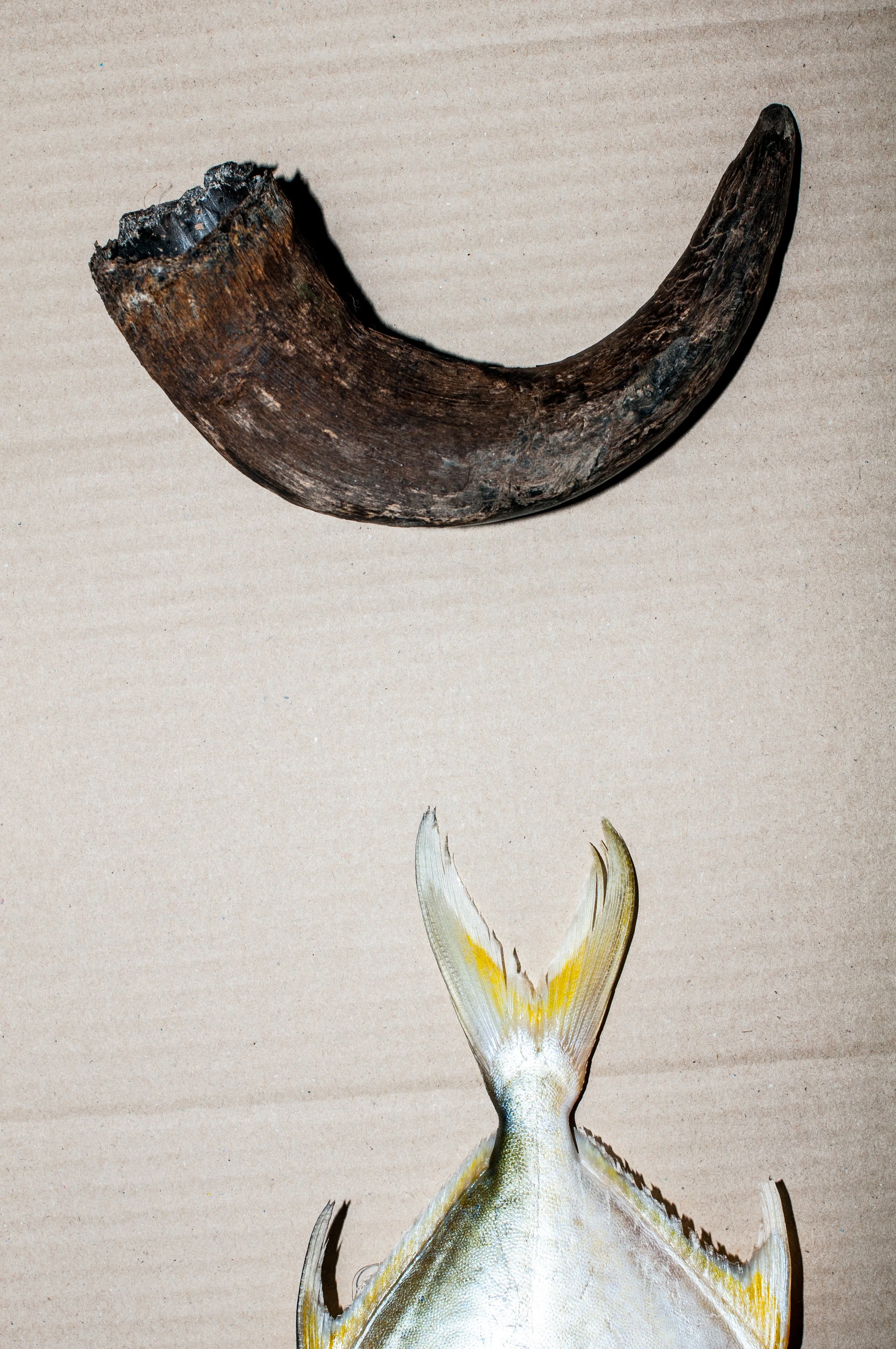
The fish appears here not as symbol but as substance — removed from water, placed under light, and encountered at the threshold where biological life enters the systems that regulate it. Alongside it: currency, and a horn detached from the animal that once bore it. These are not metaphors for exchange and loss. They are its materials.
Redemptive Act assembles objects that have passed through extraction, circulation, and displacement — and places them within configurations where those passages become visible. The fish has moved from organism to commodity. The coin has moved from metal to measure. The horn retains the curvature formed by years of growth, now reorganized within human space. None of them have disappeared. They persist by changing condition.
Photography operates here as a constructive act: isolating, saturating, confronting. Color functions not as mood but as field — a stabilizing pressure that strips away narrative contingency and intensifies material presence. What remains when function is suspended is not meaning but surface, and surface is where the work begins.
Redemption appears not as purification but as persistence. Matter endures.